
How to find an AI co-founder or founding AI engineer for your startup
Updated: Nov 12
You have the idea, maybe early customers, and you know AI sits at the core of the product. What you don't have is the person who can build it: someone who has shipped LLM features, RAG or AI agents to production and can own the technical side of the company.
Finding an AI co-founder is one of the hardest early decisions a non-technical founder makes. Get it right and you have a partner who builds the product and the team. Get it wrong and you lose months, equity and momentum. This guide covers who to look for, where to find them, and how to test the fit before you commit.
First decide: AI co-founder, founding AI engineer or fractional?
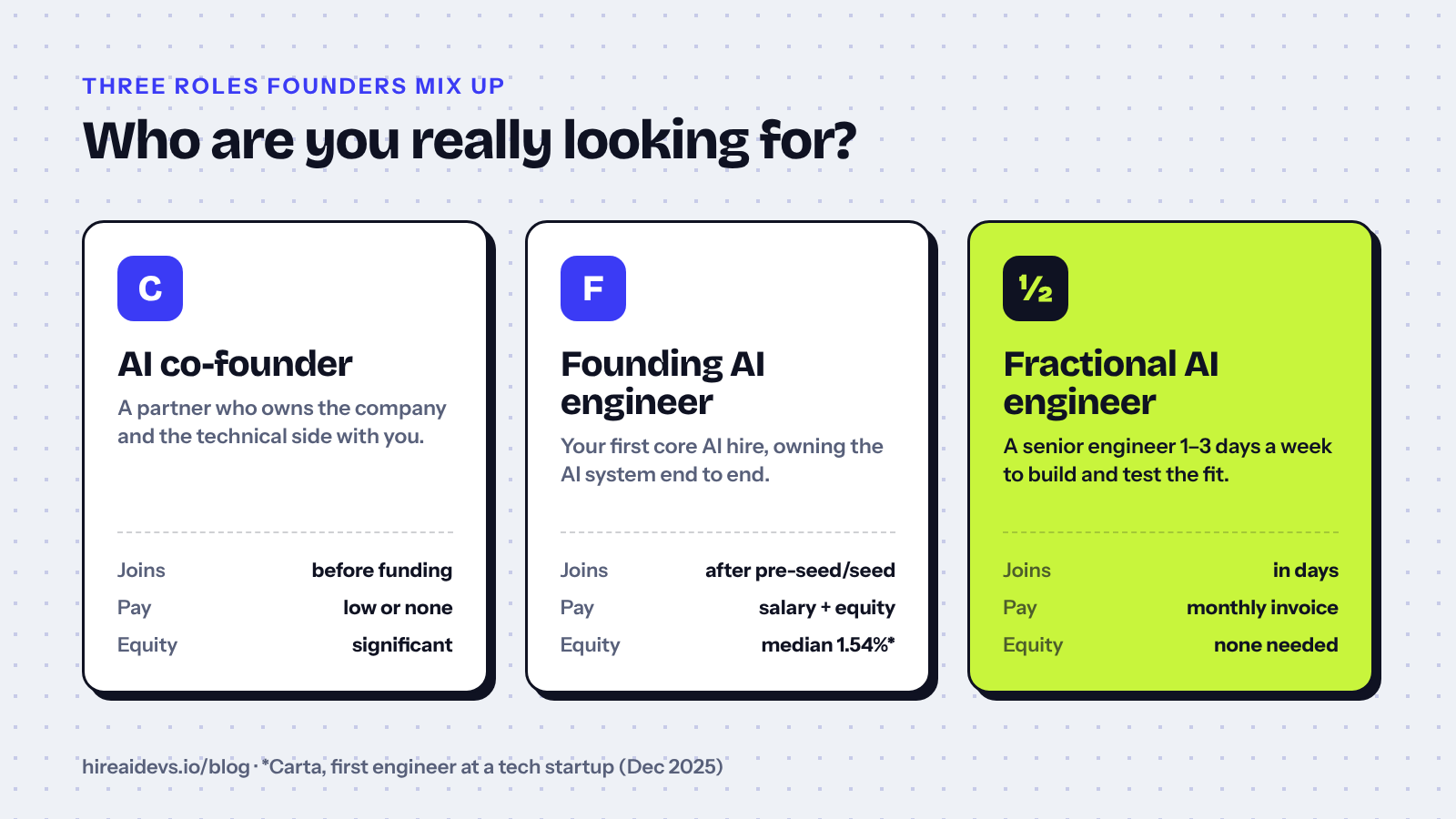
Founders often say "co-founder" when they mean three different things. Be clear about which one you need before you start looking.
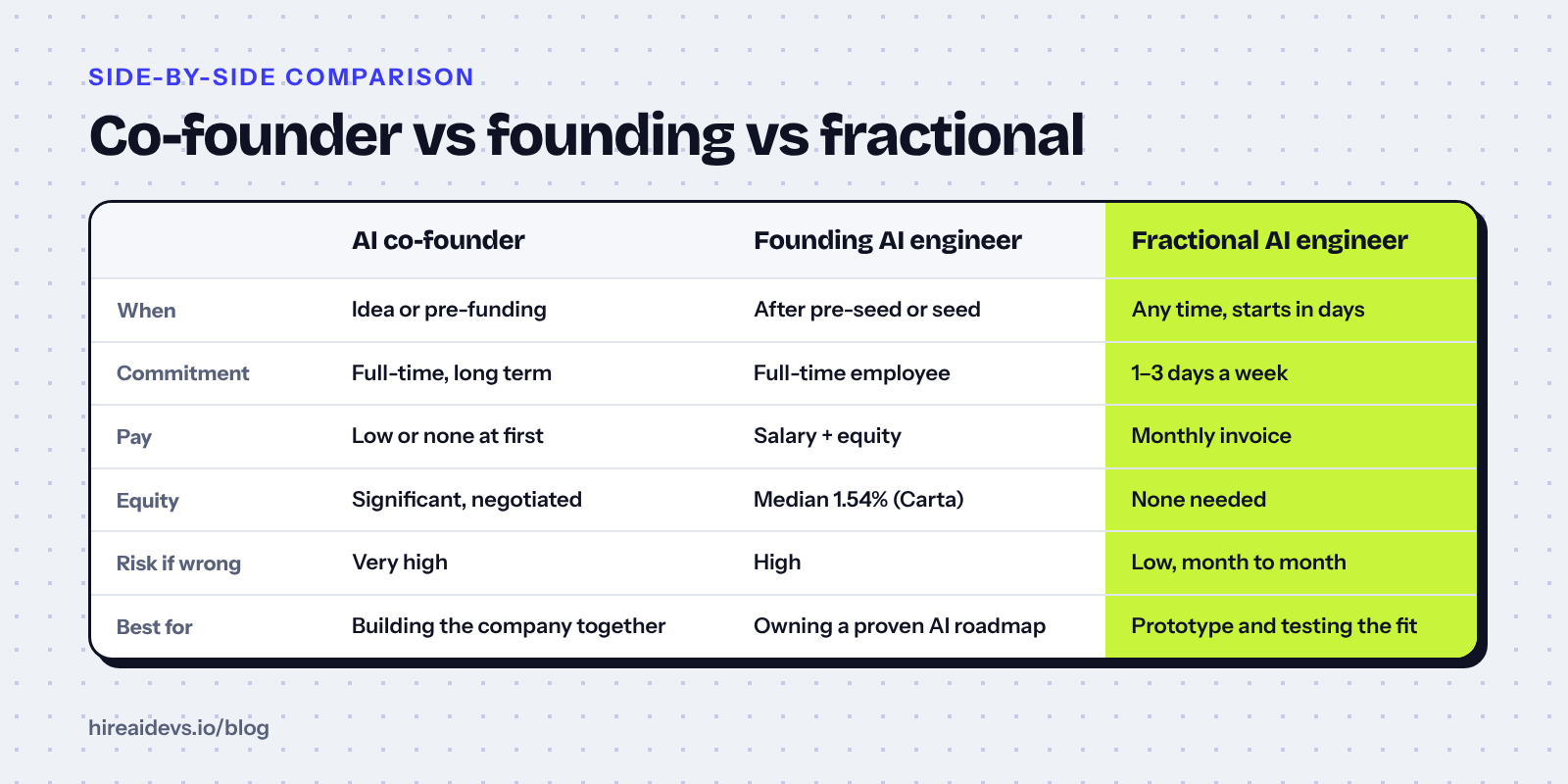
AI co-founder (technical co-founder). A true partner who owns the company with you. They usually join before funding or product, often for little or no salary, and get a significant equity stake. There is no standard split; it depends on who brings the idea, the capital, the customers and the commitment.
Founding AI engineer. Your first core AI hire, usually after a pre-seed or seed round. They get a salary plus meaningful equity and own the AI system end to end. Carta data puts the median equity grant for a startup's first engineer at 1.54%, with the middle half of grants between about 0.6% and 3.5%.
Fractional AI engineer. A senior AI engineer who works with you 1–3 days a week on an agreed scope. No equity required. Many founders use this to build the prototype and test the working relationship before offering a co-founder or founding role.
What makes a good AI co-founder
The AI talent market is full of impressive demos. A co-founder needs more than that. Look for:
Production experience. They have shipped LLM features, RAG or AI agents to real users and dealt with cost, latency and failure cases.
Evaluation discipline. They can tell you how they'd measure whether the AI actually works, not just show a good-looking prototype.
Product judgement. They push back on features that don't matter and know when a simple rule beats a model.
Ability to build a team. Your first AI engineer shapes your architecture and the people who come next.
Commitment and risk appetite. Can they live on a low salary for a year? Are they ready to go full-time?
Not sure what level of experience you need? Our AI engineer levels guide explains the difference between mid-level, senior and staff engineers.
Where to find an AI co-founder
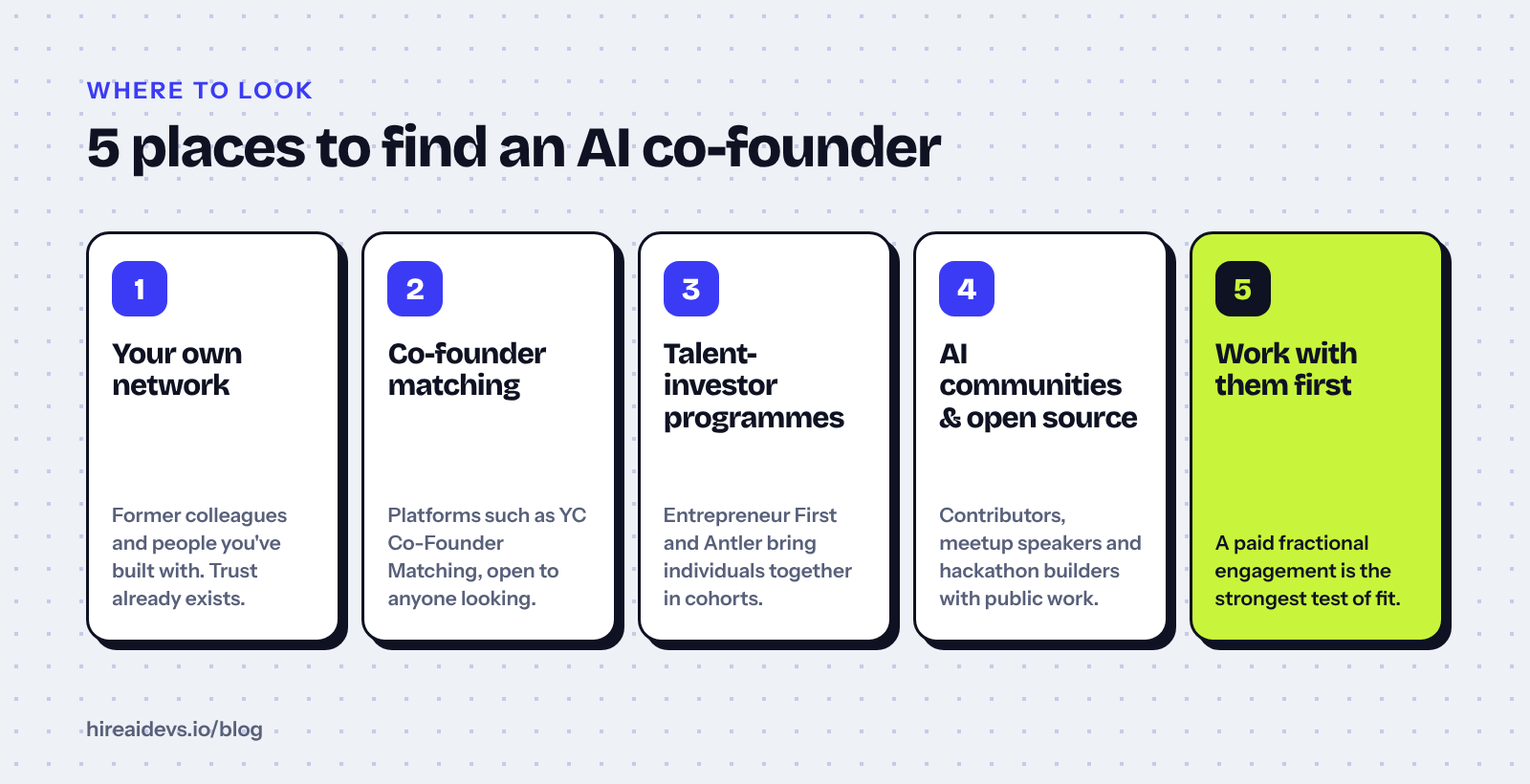
Your own network first. Former colleagues, university friends and people you've built something with before are still the most reliable source. Trust takes years to build and you already have it.
Co-founder matching platforms. YC Co-Founder Matching is open to anyone actively looking for a co-founder: you describe yourself and what you're looking for, browse profiles and message people you'd like to meet.
Talent-investor programmes. Entrepreneur First and Antler bring individuals together in a cohort, often before they have a company, so they can meet a co-founder and get pre-seed funding.
AI communities and open source. Engineers who contribute to open-source AI projects, speak at AI meetups or win hackathons have public proof of what they can build. You can see their code before you meet them.
Work with them first. The strongest signal is real work together. A paid fractional engagement lets you see how someone thinks, communicates and delivers before you split equity.
How to test the fit before you commit
Choosing a co-founder is often compared to a marriage, so date first. YC recommends meeting and, when it makes sense, doing a time-boxed project together. In practice:
Work on a real problem for 4–8 weeks. Build the first prototype or fix the part of the product that matters most. Paid fractional work keeps it fair for both sides.
Watch how they handle bad news. AI systems fail in surprising ways. Do they measure it, explain it and fix it, or hide it?
Talk about the hard things early. Roles, decision-making, salary, equity, full-time commitment and what happens if one of you leaves.
Use vesting. The most common setup is four-year vesting with a one-year cliff, so equity is earned over time. Put it in a founders' agreement and get legal advice for your country.
Red flags to watch for
Only demos and notebooks, nothing running in production.
Can't explain how they'd evaluate quality or control cost.
Wants a large equity stake but won't commit full-time.
Avoids difficult conversations about roles and money.
Strong opinions on tools, weak curiosity about your customers.
A practical path for non-technical founders
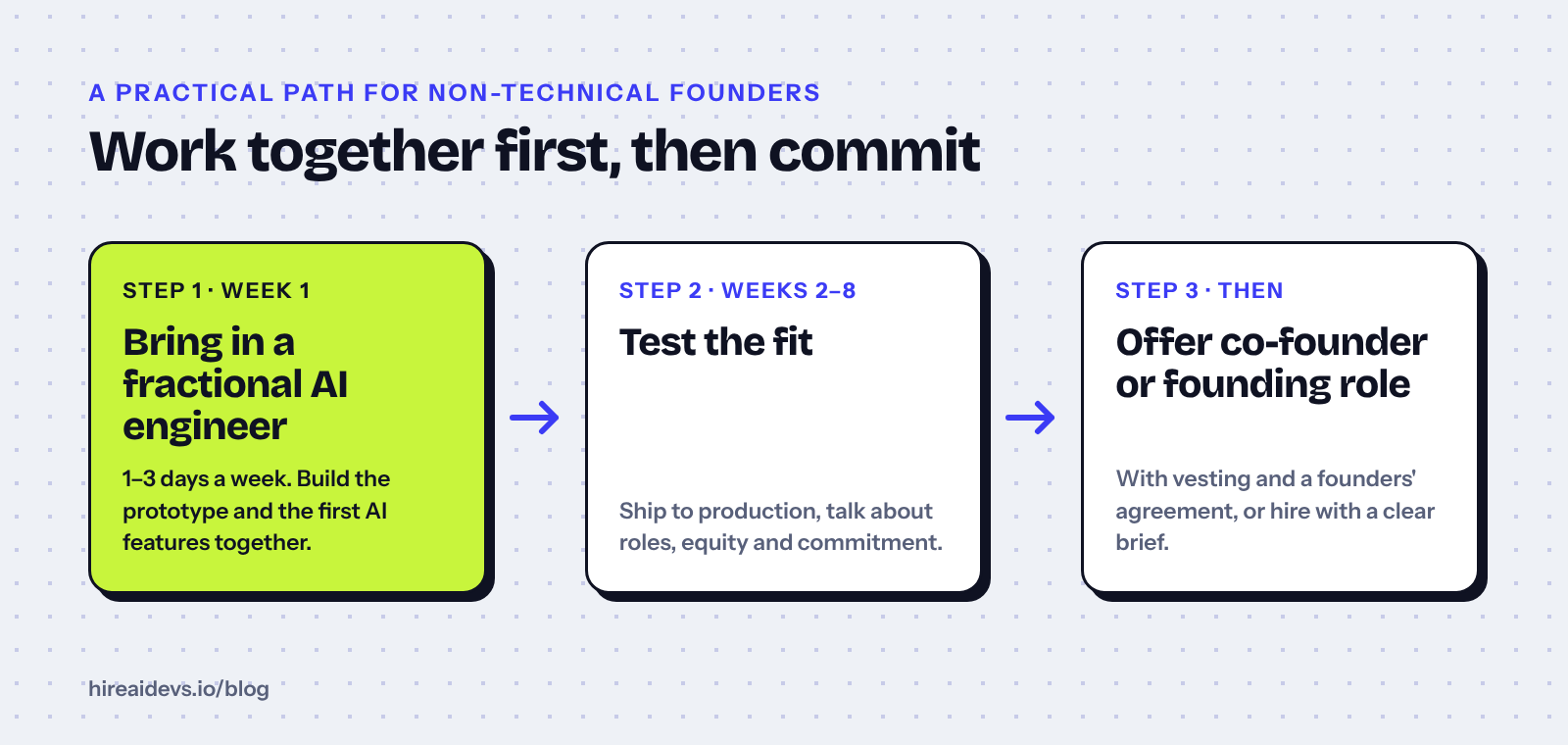
If you don't already know the right person, you don't have to bet the company on a first meeting. Many founders start with a fractional AI engineer who makes the first architecture decisions and ships the first production features. After a few months you know what you need. You can then offer that engineer a co-founder or founding AI engineer role, or hire with a much clearer brief.
Related guides
Need help finding your AI co-founder?
HireAIDevs connects startups with vetted, Europe-based AI engineers who have shipped AI to production, for fractional, remote and founding roles. Tell us what you're building and we'll introduce 2–3 engineers who fit, so you can start working together and see if there's a co-founder match.

Comments